In this 5 lecture series James Mallinson takes a deeper look at the Hatha Yoga lineage. He covers many areas from the texts to the practitioners, the philosophies to the practices. James is one of the world’s foremost experts on Hatha Yoga.
Purchase our eight Indian Tradition courses for the discounted price of only £80.
You will get our courses on the The Philosophy of the Yoga Sutra, The History and Practices of Hatha Yoga, The Upanishads: Stories of the Self, Tantra: Theory and Practice, Women in Yoga, Swami Vivekananda & His Legacy, How Yoga Came to Britain and Hindu Asceticism & its Spiritual Disciplines
In this course John Danvers presents what he calls ‘the mysticism of being-here’ – a particular interpretation of mysticism that differs from many of the more orthodox views. John draws on the writings of a wide range of mystics, and on commentaries by other authors who have addressed different aspects of mysticism; these include: Teresa of Avila, Jacob Boehme, the anonymous author of The Cloud of Unknowing, Meister Eckhart, Martin Heidegger, Thomas Merton, Baruch Spinoza and a number of Buddhist teachers.
These three lectures are an introduction to one of the most important schools of philosophy in the ancient world, the followers of Plato (c.348-428 BCE) who are now called the Neoplatonists. Writing from roughly 100 to 500 CE, these philosophers offered interpretations of Plato’s ideas from varying perspectives but always focussing on the nature of the human soul, and its relationship with the cosmos and with the One, the supreme, divine ground of being which gives rise to all that is. Each lecture is devoted to a different personality and viewpoint – Plotinus’ contemplative approach, Iamblichus’ ritual approach, and the visionary mysticism of the legendary Hermes Trismegistus.
This course takes an in-depth look at the philosophy underpinning the Yoga Sutra of Patanjali. Over 5 lectures Karen explains the historical and cultural background in which the text was compiled.
In these four talks, Peter Tyler explores the factors that contributed to the rise of mystical writing in 16th Century Spain. He highlights two of the most prominent mystics of the time Teresa of Avila and St. John of the Cross.
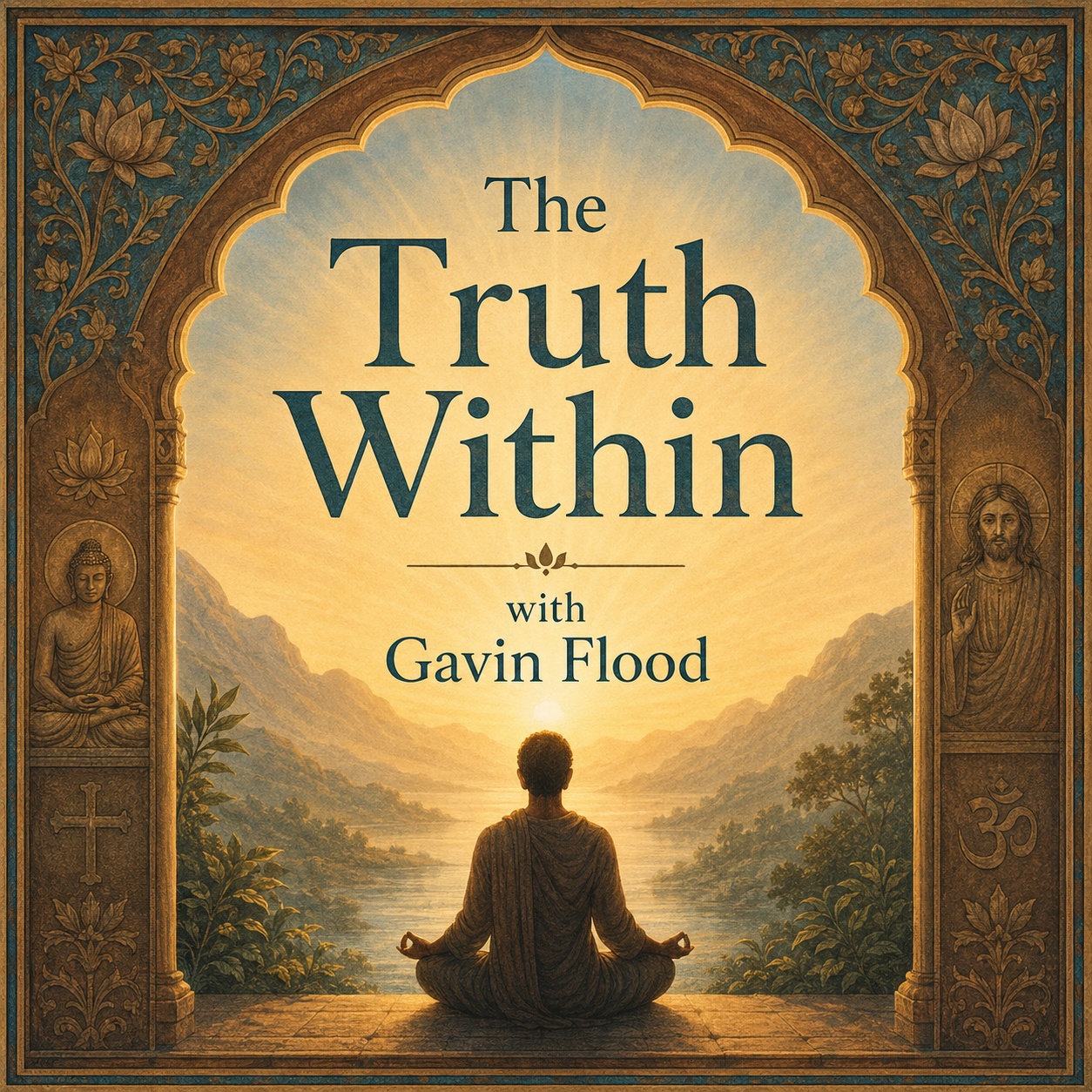
Over four lectures, Gavin Flood explores the idea of “the truth within” — the conviction, found across the world’s great traditions, that hidden inside each of us is a deeper, more authentic self, reached through meditation, prayer and yoga. Tracing this idea through Hindu, Buddhist and Christian sources, he asks what this inner truth actually is, how different civilizations have understood it, and whether it still speaks to us in today’s global society.
In this 5 lecture series Graham Burns gives a broad overview of the Upanishads, explaining the history and culture in which they arose. He takes you through several themes that are explored in some of the more prominent Upanishads.
Over four lectures, Nicholas introduces us to the lives and sayings of the desert fathers, with a particular focus on the fascinating writings of Evagrius of Pontus (c. 345-399). In doing so, he makes the wisdom of the desert relevant to contemporary spiritual practice.
In these two lectures about Sandro Botticelli (1444-1510) and the meaning behind two of his best loved paintings, Angela introduces you to the esoteric worldview which flourished in the early centuries CE in cultural centres such as Alexandria in Egypt, and was reborn in Renaissance Europe. In fifteenth century Florence, a group of intellectuals centred around the great Platonic philosopher Marsilio Ficino (1433-99) instigated a revival of what was then called ‘the ancient wisdom’, now often referred to as the Western esoteric tradition, or the Perennial Wisdom.